2024
Mechazilla catches the booster
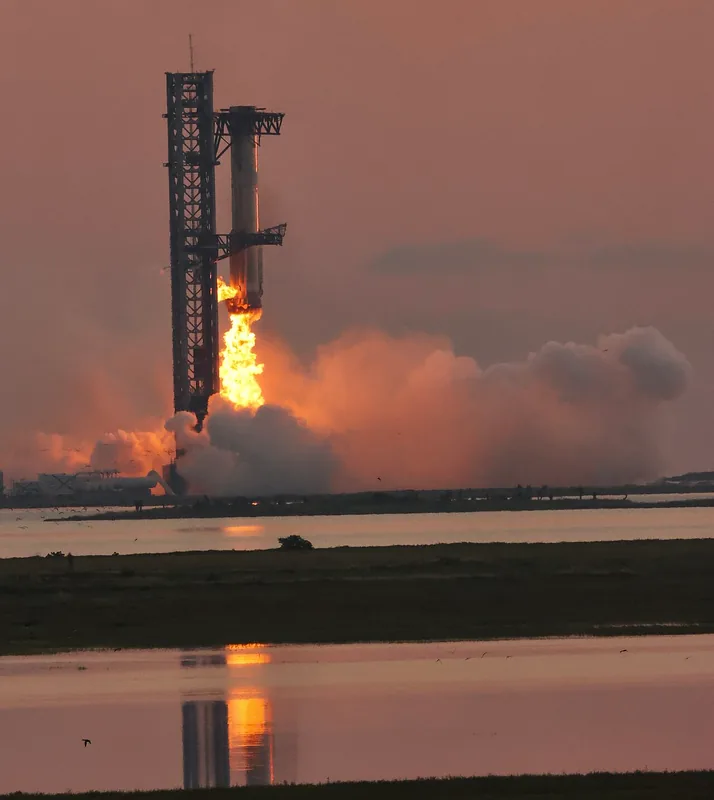
The bottom stage of the rocket came back to the pad it had left just under seven minutes earlier, relit thirteen of its thirty-three engines, shut all but three of them off, and slowed until it was almost hanging still. Two arms on the tower closed under a pair of pins between the grid fins, and seventy-one metres of stainless steel, nine metres across, hung there off the side of a building. Forty-six seconds before the arms closed it had still been supersonic, and the burn that did the rest lasted twenty-four seconds. Boosters had been landing themselves since December 2015, on a pad and then on a ship at sea, the 600th in April 2026, each on four legs carried up and back. This one had none, so either the tower took it or it went into the Gulf: thousands of checks had to read clean and a flight director had to send the catch command by hand. It worked on the first attempt.
Source: Wikipedia
The film, word for word
How do you catch a twenty-story rocket?
You blow up a lot of them first. In 2002, Elon Musk started SpaceX to reuse rockets, like planes. His first rocket failed three times. Musk:
“I don't ever give up.”
“I'd have to be dead or completely incapacitated.”
Noted.
The fourth, on their last money, made orbit. Next, land them. They exploded. SpaceX's blooper reel: thirty-one million views. December 2015, in the control room:
“It's standing up. It's standing up.”
Then two at once:
That can't be real.
Flat-earthers agreed. Starship's legs weighed too much. Musk had an idea.
Oh no.
Robot chopsticks. Tweeted with a Karate Kid clip. His first hire, Tom Mueller:
“we all just rolled our eyes like, "This is crazy. There's just no way."”
October 2024. The tower catches it, or the Gulf does.
“This is absolutely insane.”
First try?
First try. After twenty-two years of trying.